A camera answers one very specific question well
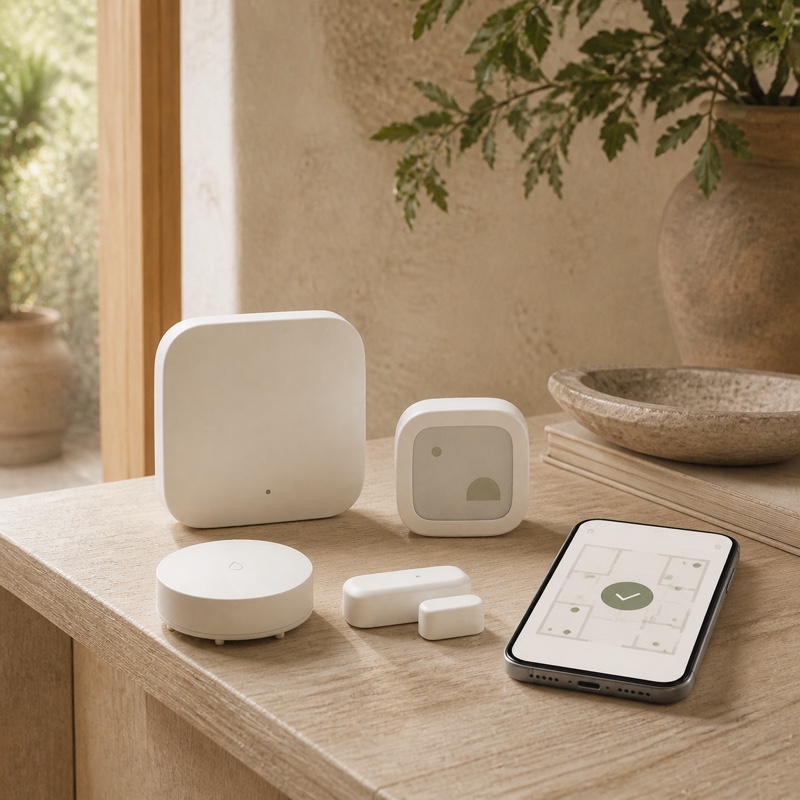
A properly installed camera can show an entrance, record movement within its coverage and let you consult images remotely. As part of a suitable system, it may also help deter intrusion or visually confirm what caused an alert.
That is useful, but it is not the same as knowing the condition of the home. The image depends on angle, lighting, internet access, power and the equipment itself. Even when everything works, the camera only shows what it is pointing towards.
The choice should not be technology or local presence. Start with the question: do you want to know whether someone entered, whether movement occurred, or whether the property remains physically as you left it? Each question needs a different tool.
A blind spot is not always outside the frame
Some problems are literally out of shot: a displaced roof tile at the back, water under a cabinet, a window in an outbuilding or fallen vegetation by the access. Others may sit in front of the lens and remain almost invisible.
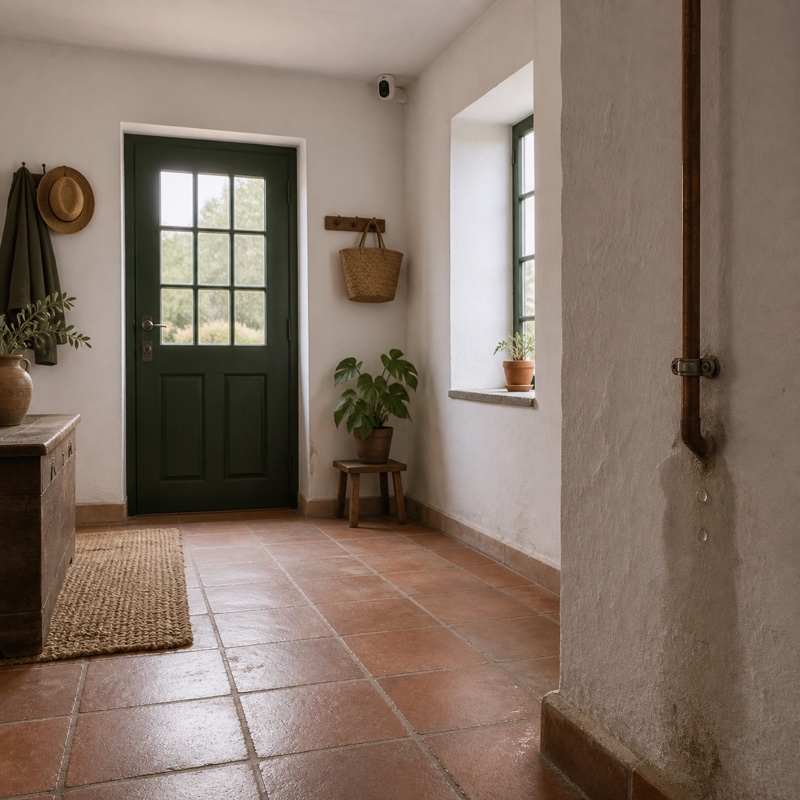
Damp often begins as a slight change in colour. A failed refrigerator can look unchanged. A stale, gas or drain smell does not appear on video. Low water pressure, a sticking lock or an unusual noise also require someone to interact with the property.
- Damp, mould or condensation in a room outside the camera's coverage.
- Small leaks inside cupboards, near appliances or behind walls.
- Unusual smells, very humid air or signs of pests.
- Power, water or equipment failures without a clear visual indicator.
- Damage to roofs, gutters, walls, gardens, outbuildings or boundaries.
- Accumulated post, sticking gates and changes to access routes.
Seeing an alert does not resolve its cause
A notification begins a decision; it does not finish the problem. If a camera goes offline, the cause may be the internet, electricity, battery or an equipment fault. From abroad, each can look exactly the same on screen.
The same applies when movement is detected, a door appears open or the image changes after strong wind. Someone must decide whether to keep monitoring, arrange a safe local check or contact a technician, security company or authority.
During an emergency, nobody should enter an unsafe area or replace the competent services. A local visit can observe and report when access is authorised and safe, within the scope agreed in advance.
More cameras do not necessarily mean better oversight
Trying to remove every blind spot can create a complex, intrusive system that is difficult to maintain. Legal limits also apply. Portugal's data-protection authority states that cameras on private property must not capture public roads, neighbouring properties or shared access routes and should cover only what is strictly necessary.
If workers, guests or other authorised people enter the property, privacy needs further consideration. Access credentials, security updates, recordings and permissions should all be managed carefully.
A balanced approach places cameras and sensors where monitoring is justified and uses physical checks for anything that requires close sight, smell, sound, comparison or a small practical action.
A useful visit is more than someone passing by
A local presence adds value when it follows a clear routine. Before an absence, the owner and local contact should define authorised areas, what to observe, what must not be handled and when somebody needs to be contacted.
During the visit, photographs from similar positions make changes easier to compare. A consistent list reduces the risk of noticing only what immediately draws attention while overlooking less obvious areas.
- Confirm access points, doors, windows and shutters.
- Look for visible signs of water, damp or damage.
- Check previously agreed indicators and equipment.
- Review the exterior, outbuildings and access included in the plan.
- Record current photographs and a note about any change.
- Report an urgent or unsafe situation immediately.
Technology and visits perform different roles
A camera can provide an immediate view. A sensor can detect one particular condition. A visit can observe the wider picture, compare, test only what was agreed and leave a contextual record. A technician diagnoses and carries out specialist work.
These roles complement one another but are not interchangeable. A property check is not permanent surveillance, alarm response, a certified inspection or a repair. Equally, a live image does not confirm the condition of everything inside and outside the property.
| Need | Most appropriate resource |
|---|---|
| View an access point | Well-positioned camera |
| Detect a specific condition | Suitable sensor |
| Observe and compare the property | Documented visit |
| Diagnose or repair | Qualified professional |
| Respond to danger or crime | Competent authorities |
Before you leave, close the response loop
Test cameras and sensors, confirm who receives alerts and record the necessary contacts. Then answer the question many setups leave open: if the screen shows something unusual, or stops showing anything, who can check what happened?
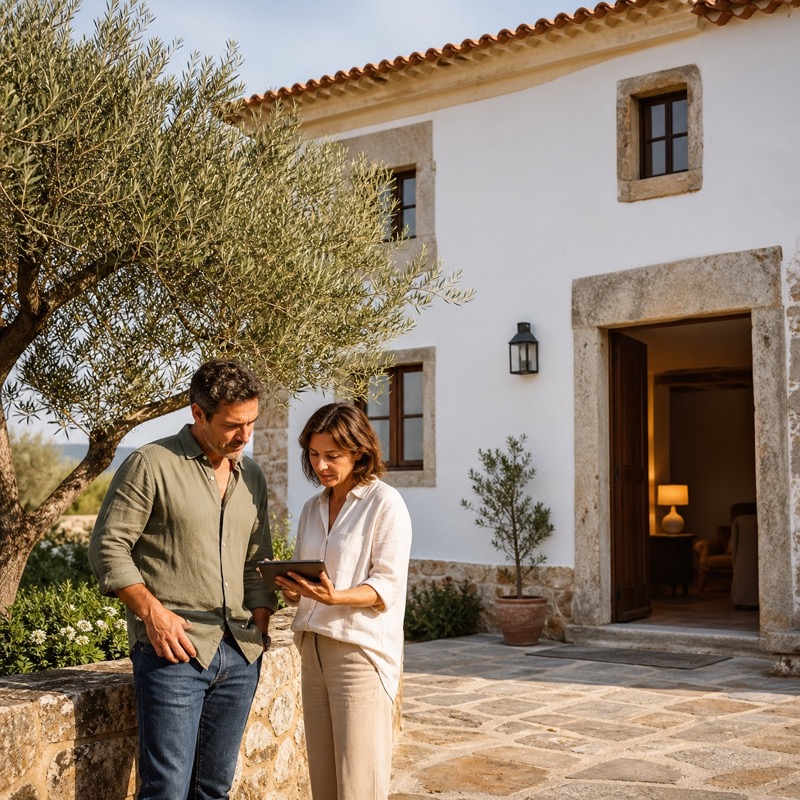
Choose a local contact, provide a safe way to enter and define the limits of their authority. Agree the frequency of visits, report format and situations that require immediate contact.
Technology reduces distance. A local routine reduces the uncertainty that remains when the image cannot tell the whole story.